
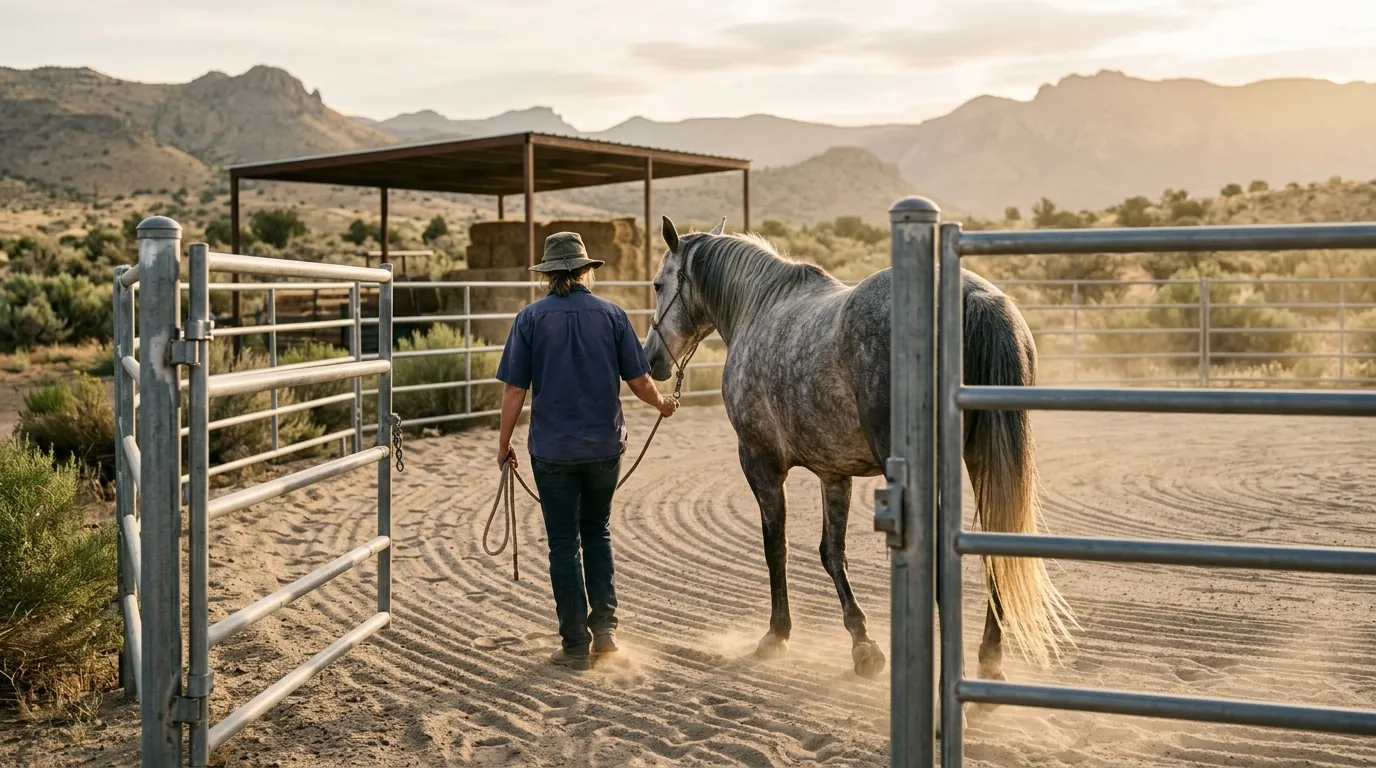
Horse Property in Las Vegas: Horse Zoned Homes and Acreage
We live this
Marc has lived in the northwest valley since 1994 and keeps five horses on his mini ranch near Kyle Canyon. When we walk a horse property with you, we're looking at it the way he looks at his own: where the hay goes, how the trailer gets in, what happens to the arena footing after a monsoon storm.
That matters, because horse property is where a pretty listing can hide an expensive problem. A barn without permits. A well nobody tested. A lot that's zoned for two horses when you have four.
Where horses are allowed in the northwest
There's no single "horse neighborhood." Horse lots are spread across the northwest in pockets, and most of them fall in three areas.
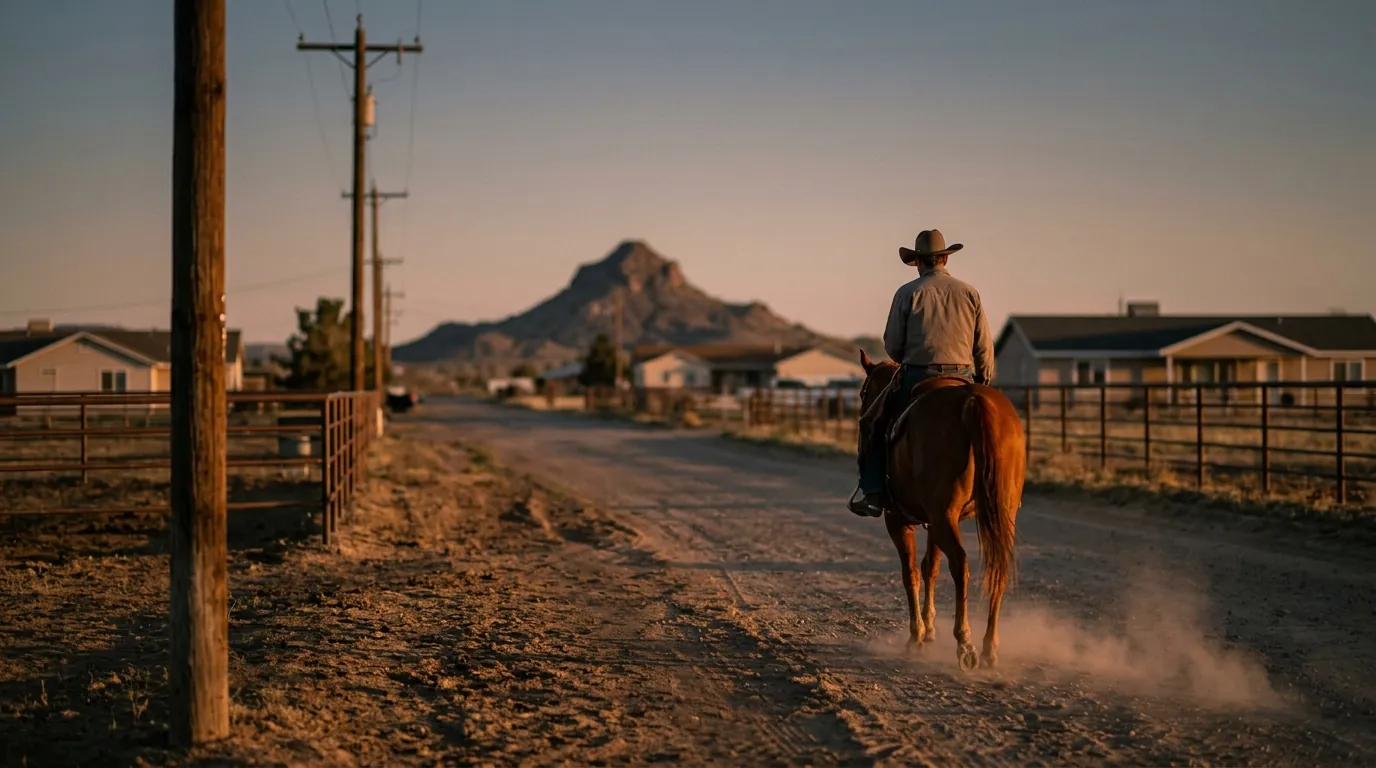
Lone Mountain
A Clark County planning area of about 30 square miles, with big lots, lots of barns and the mountain itself in the middle. Much of it is unincorporated county, not city.
Read more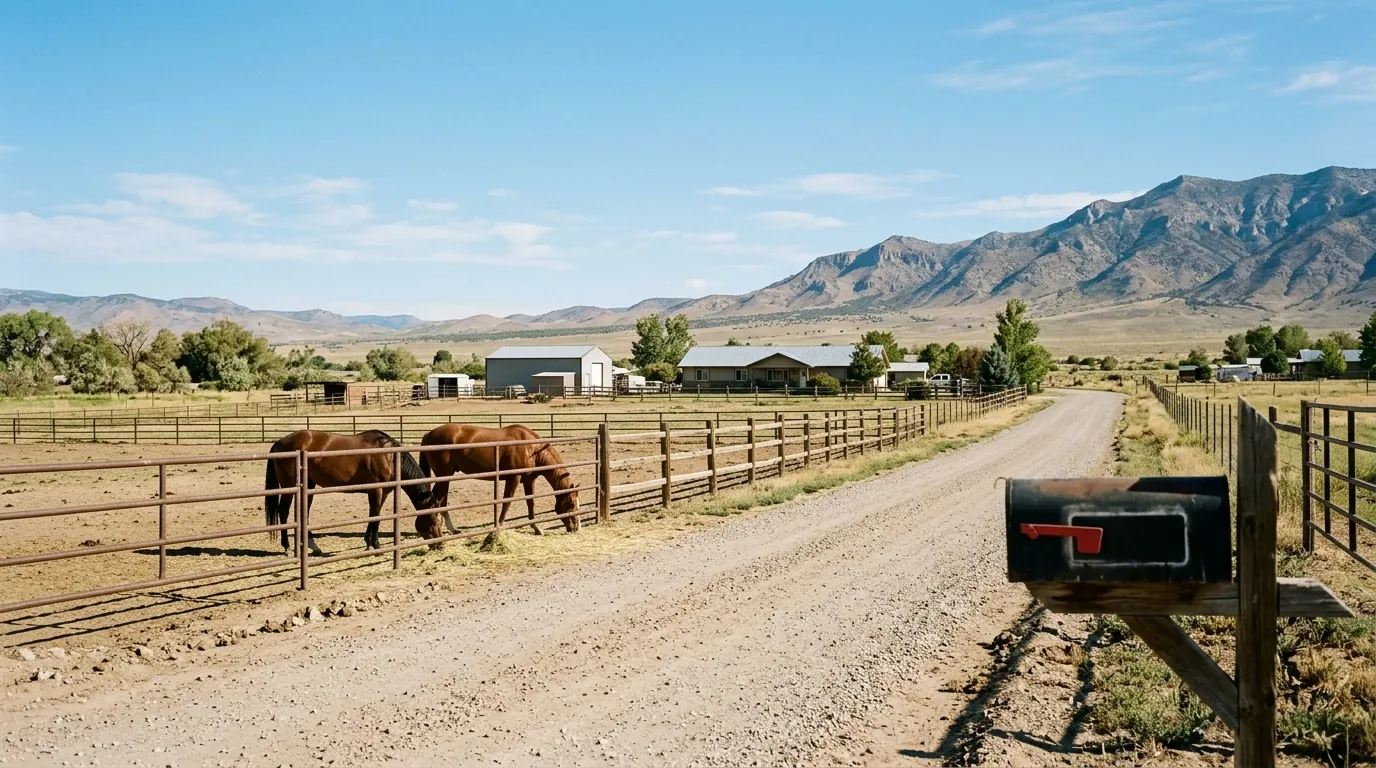
The Centennial Hills Rural Preservation area
The City of Las Vegas set these streets aside for large lots, no more than two homes per acre, with animal keeping allowed. No sidewalks, no streetlights, plenty of horse trailers.
Read more
Kyle Canyon Road and Mount Charleston
Acreage heading up toward the mountain, near Marc's mini ranch. Bigger lots, wells, and a longer drive to town.
Read moreCity or county? Check the parcel
This is the first thing we look up, and it's the one most buyers don't know to ask. The northwest is a patchwork. About 4,000 acres of unincorporated Clark County sit inside the City of Las Vegas's outer boundary, and a lot of that land is rural. Two lots on the same road can fall under different codes.
This is what each code says about horses, as we read it in September 2026. Codes change, and this is a summary, so confirm the current rules for your parcel.
City of Las Vegas. The city's Unified Development Code (Chapter 19.12) treats animal keeping as a conditional use in some residential districts. For horses, it allows no more than one horse or cow per 7,500 square feet of lot area. In the R-D district the cap is two horses, on a lot of at least 18,000 net square feet. On R-1 lots, the only farm animals allowed are chickens. Crowing roosters are not allowed. The code also asks for a site plan showing the number and types of animals, submitted to the city for review.
Unincorporated Clark County. The county's Title 30 code calls horses "large livestock." In the urban part of the valley, they're allowed only in the RS80, RS40, RS20 and AG districts (RS20 has a 20,000-square-foot minimum lot), at one animal per 7,500 square feet of lot area, up to 25. Title 30 also sets minimums for each horse: at least 120 square feet of stall or pen, with 90 square feet of it protected from the weather, and at least 1,200 square feet of pasture, turnout or exercise area. Stables, paddocks and arenas have to be fenced.
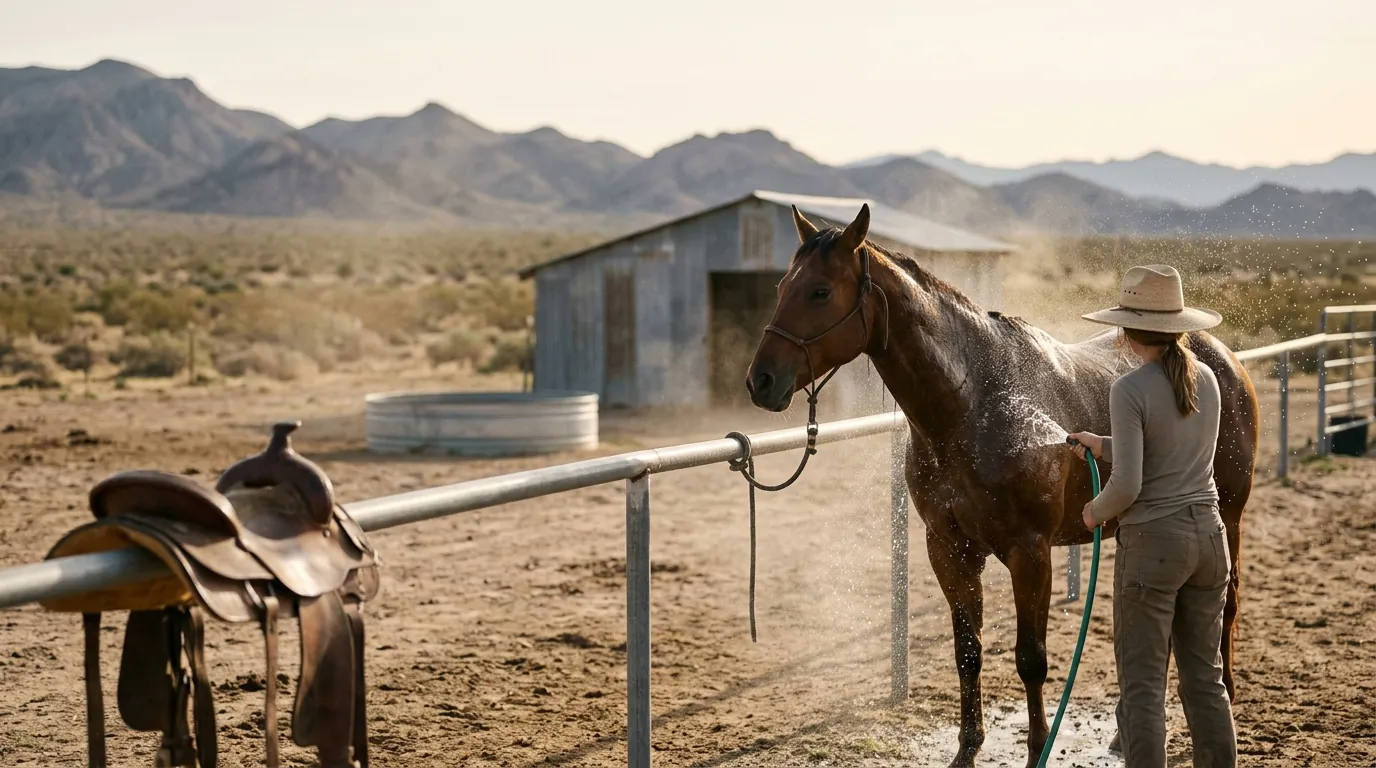
So how many horses on a half-acre? A half-acre is 21,780 square feet. At one horse per 7,500 square feet, that works out to two horses on paper under either code. An acre works out to five. In real life you'll have fewer, because the house, the pool, the driveway and the RV pad all eat into the usable space, and your HOA or deed restrictions may cut the number again. We pull the zoning on every horse property we show.
Half-acre and acre lots: what you're really buying
A lot of our buyers start by searching "half-acre lots" or "1 acre homes for sale" and then realize what they want is room: for horses, a shop, an RV, a garden, or just space from the neighbors.
A half-acre in the northwest usually means a house, a pool or a yard, and room for one or two horses with a small turnout. It's enough for a hobby barn. It's tight for an arena.
An acre or more is where a real setup starts: a covered arena, a few stalls, hay storage, trailer parking and room to turn the rig around.
The trap with acreage listings is that the land size in the MLS isn't always the usable size. Easements, washes, setbacks and a long driveway can take a real bite. We look at the parcel map and the aerial, and then we walk it.
What to look at on a horse property
This is our checklist. We'll go through it with you at the showing.
- Arena footing. What's it made of, how deep is it and how does it drain? Footing that turns to soup in a monsoon storm, or to concrete in July, costs money to fix.
- Fencing. Pipe fence, wood rail or no-climb wire? Check the posts, the gates and whether it's safe for your horses. Title 30 requires fencing around stables, paddocks and arenas on county parcels.
- Shade and shelter. Summer here is serious. Look for covered stalls, a mare motel or at least shade over every pen, and think about where the afternoon sun hits.
- Water to the barn. Is there a line to the stalls, or will you be dragging hoses? Automatic waterers need checking in winter too; it freezes up Kyle Canyon.
- Hay storage. A covered hay barn keeps a load dry and out of the sun. Ask where the last owner stored it and how a delivery truck gets in.
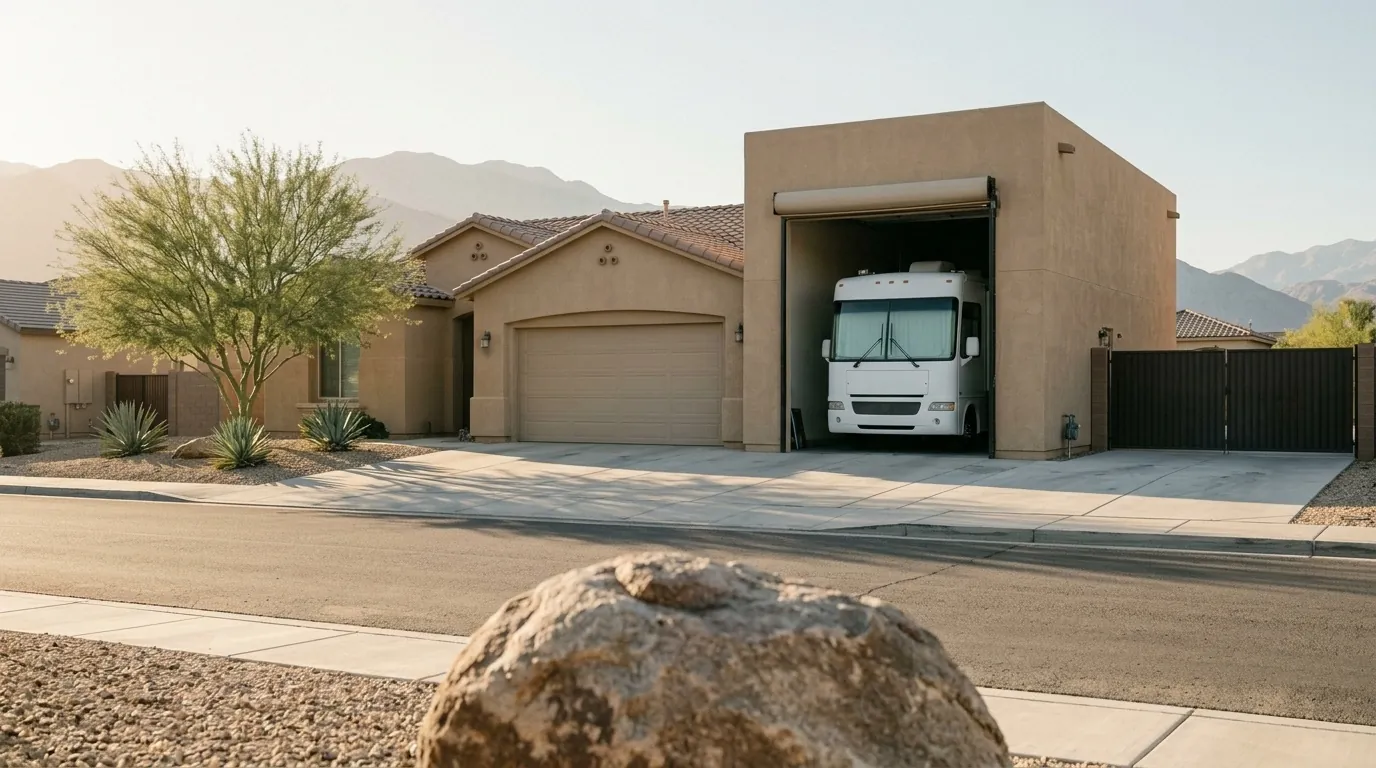
- Trailer parking and access. Can you pull a horse trailer in, turn it and park it without backing onto the road? This is the same check we do on RV homes, and plenty of horse buyers need both.
- Manure. Where does it go? A plan for it matters more on a half-acre than on five.
- Permits. Barns, covered arenas and casitas sometimes went up without permits. That can matter at resale or when you want to add on.
- Trail access. Some rural streets connect to riding routes, and some don't. Floyd Lamb Park at Tule Springs has horse trails and charges $6 per vehicle. Lone Mountain Park, a Clark County park at 4425 N. Jensen Street in 89129, has a covered practice arena and two round pens; it opened as an equestrian park in April 2016 (Las Vegas Review-Journal). Before you count on riding out from a property, check the actual route, not a line on a map.
Wells and septic
A lot of rural homes in the northwest run on a private well and a septic system. Michelle's home does. Many locals see a working well as a plus, and the old advice out here is: if you have a well, keep it.
Wells. The Nevada Division of Water Resources says a domestic well can pump up to two acre-feet a year, and that domestic use includes watering livestock and other animals within that limit (Domestic Wells FAQ, revised June 2024). Ask the seller for the well log, any pump and repair records and recent water tests. Then have the well inspected and the water tested during your inspection period. If the home is on a shared well, ask for the shared well agreement.
Septic. The Southern Nevada Health District keeps septic system plans, and you can look them up online by address or parcel number. We pull those before inspection. A septic inspection costs far less than a failed system, and you'll want to know where the tank and leach field sit before you plan a barn or a pool.
Questions about buying out here? Call or text Michelle, or send a note and one of us will get back to you.
"Can you own a horse in Las Vegas?"
Yes. You need the right zoning and enough land. Horses are allowed on many rural and large-lot parcels in the northwest, under City of Las Vegas and Clark County rules that tie the number of horses to lot size. You can't keep a horse on a typical subdivision lot, and many HOAs ban them outright, so check the zoning and the CC&Rs before you buy.
"How much is 1 acre of land in Las Vegas?"
We won't make up a number. There's no reliable single figure, because an acre in Las Vegas can be raw desert or a finished horse setup, and those price very differently. What moves the price:
- Location. An acre in Lone Mountain or Centennial Hills isn't priced like an acre far out on the edge of the valley.
- Utilities. Power at the lot line, city water or a well, sewer or septic. Bringing any of them in costs real money.
- Zoning. Whether horses and a second structure are allowed.
- Improvements. A house, a barn, an arena, fencing and a pool are where most of the value sits.
- Access. A paved public road versus a private dirt road the neighbors maintain.
If you're shopping for an acre, we'll pull recent sales of similar acre parcels near the one you like. That's the only number worth trusting. You can also browse listings yourself on our MLS search; just don't lean on the horse property filter, because it misses a lot of homes.
Why buy horse property here
It's country living without leaving Las Vegas. You can ride in the morning and be at a Raiders game by kickoff. You're close to the mountain for summer hikes and to Lee Canyon for skiing in winter. And your neighbors will probably have horses too, which means someone to call when your gelding gets out.
It's also more work than a tract home, and it isn't for everyone. Rural roads can be rough, the grocery run is longer and there's always something to fix. If that sounds like fun, you're our kind of buyer. Read more about Marc, who knows a guy for fencing, farriers and just about everything else.
Frequently asked questions
Can you own a horse in Las Vegas?
Yes, on land with the right zoning. The City of Las Vegas and Clark County both allow horses on certain residential and rural lots, at no more than one horse per 7,500 square feet of lot area. Most subdivision lots and many HOAs don't allow them, so check the parcel's zoning and any CC&Rs before you buy.
How many horses can I keep on a half-acre in Las Vegas?
Usually one or two. A half-acre is 21,780 square feet, and at one horse per 7,500 square feet the city and county codes allow two on paper. The house, pool and driveway take up room, and HOA or deed restrictions can lower the number, so we check the zoning on every horse lot we show.
How much is 1 acre of land in Las Vegas?
It varies too much for one number. Location, utilities, zoning and what's already built on the land drive the price, and a bare acre prices far below an acre with a house, barn and arena. We pull recent sales of similar acre parcels near the one you're considering.
Where is horse property in Las Vegas?
Mostly in the northwest. Lone Mountain, the Centennial Hills Rural Preservation area and the acreage along Kyle Canyon Road toward Mount Charleston hold most of it, with lots of half an acre and up. Some parcels are City of Las Vegas and some are unincorporated Clark County, and the rules differ.
Are horse properties in Las Vegas on well water?
Some are. Many rural homes in the northwest use a private well and septic system. Nevada allows a domestic well to pump up to two acre-feet a year, including water for livestock. Get the well inspected and the water tested, and look up the septic plans with the Southern Nevada Health District, before your inspection period ends.
Where can I ride near northwest Las Vegas?
Floyd Lamb Park at Tule Springs has horse trails, and Lone Mountain Park on Jensen Street has a covered practice arena and two round pens. Some rural streets connect to riding routes and some don't, so check the actual trail access from any property before you buy.
Ready to look at horse property?
Tell us how many horses, what else you're bringing (trailer, RV, a shop) and how much land you want. Call or text Michelle at 702-250-7224 or Marc at 702-768-9670.